The Garden-Care Calendar Trap
A flexible garden-care calendar helps you respond to visible needs, avoid needless jobs and choose a routine that fits your plants, weather and available time.
A garden-care calendar is useful only when it helps you notice what needs attention; a schedule that dictates jobs by date can send you pruning, watering or feeding simply because a box says so. A flexible garden-care calendar starts with visible conditions in your own beds, then leaves room for the weather, the plants and the time you actually have.
That does not mean abandoning routine. It means choosing a way to organise care that fits your garden, rather than assuming every plot follows the same timetable. Three approaches can help: a fixed seasonal calendar, a cue-led task list, or a light hybrid that uses dates as reminders to look rather than instructions to act.
Why dates mislead
Calendar dates are easy to share, but garden conditions are local. A sheltered courtyard may warm earlier than an exposed allotment, while a heavy shower can make watering unnecessary in one bed and leave containers under a roof dry.
Plants also move through growth at different rates. A row of young salad leaves, an established shrub and a newly planted hedge do not ask for the same care simply because they share a month. A general seasonal prompt can be useful, but it cannot decide whether a particular plant is ready for a job.
Rigid schedules can create unnecessary work as well as missed work. If a lawn is growing slowly in dry conditions, a regular mowing date may be a poor cue; if a potting mix dries quickly in a warm, windy spell, a weekly reminder may come too late.
There is a quieter cost, too: a long list can make ordinary care feel like a backlog. When every seasonal job appears equally urgent, it becomes harder to distinguish a plant that needs attention now from a task that can wait.
Three care approaches
Fixed seasonal calendar
A fixed calendar assigns familiar tasks to parts of the year: sowing, pruning, feeding, tidying or checking for pests. It suits gardeners who enjoy a predictable routine, are learning the broad sequence of jobs, or care for plants whose labels and reliable local guidance give a clear seasonal window.
Its strength is memory. A prompt can remind you to inspect seed packets, clean pots or look over a climbing plant before a busy stretch of the year. Its weakness is that a date can be mistaken for a command, even when the plant or soil is not ready.
Keep this approach as a set of review points, not a contract. Write “check whether the hedge needs attention” rather than “cut hedge”, so the calendar prompts observation before action.
Cue-led task list
A cue-led list ties jobs to things you can see or feel: dry compost in a container, weeds before they set seed, a plant leaning into a path, or a seedling with its first true leaves. It suits gardeners whose sites vary from week to week, people with mixed planting, and anyone who prefers a short list over a full-year plan.
This approach makes the garden itself the prompt. It can also make short visits productive: you look across the beds, identify a need, and choose a manageable job. The trade-off is that an easily overlooked task may remain invisible until it becomes more pressing, so brief regular inspections still matter.
Light hybrid routine
A hybrid uses a few calendar reminders to trigger a walk-round, then lets visible needs determine the work. It suits most gardeners who want some structure without treating a regional schedule as a universal rule.
For instance, imagine you set a reminder at the start of a season to inspect a container garden. You notice one pot has dry compost and a trailing stem is catching on the door; you water if the compost needs it and secure the stem with soft garden twine, while leaving the other pots alone. The expected observable result is that the needy pot receives attention and the list stays limited to what the inspection revealed.
The hybrid is not a compromise for its own sake. It separates two useful functions: dates help you remember to look, and conditions help you decide what to do.
Build a short list
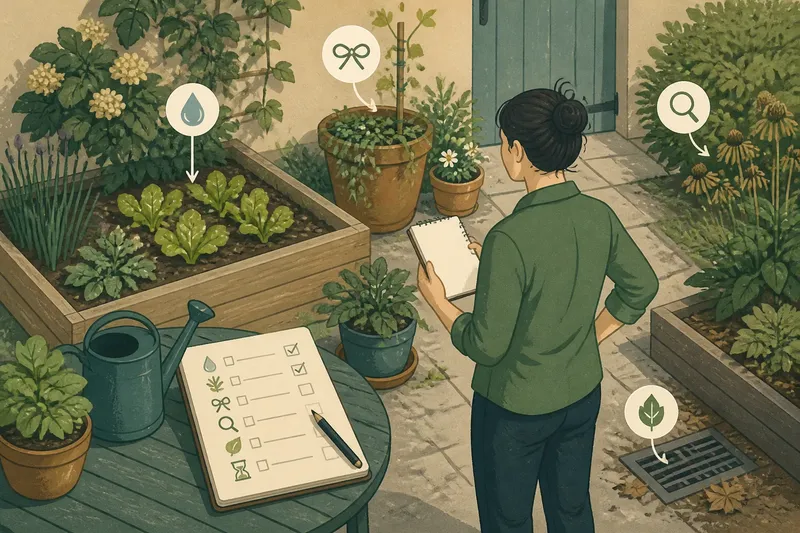
Choose a repeatable moment for a quick look, such as when you bring out the watering can or return from collecting the post. Walk the beds and containers without trying to solve every problem at once. Note only tasks with a visible cue and a clear next action.
A practical list might contain:
- Water: check the compost in exposed containers; water only where it is dry enough to need it.
- Weed: remove small weeds in the bed where they are competing with young plants or approaching seed.
- Support: tie in a stem that is leaning or likely to be damaged, using a soft tie and a loose loop.
- Inspect: look beneath leaves for an emerging pest problem, then identify the plant and issue before deciding how to respond.
- Clear: remove fallen material where it is smothering new growth or blocking a drain, rather than tidying every corner by default.
- Wait: mark a plant to revisit if its condition is uncertain, instead of intervening without knowing what it needs.
Keep urgent care separate from optional jobs. A wilting container plant may need attention before a decorative tidy, while a leaf that has simply turned colour can be watched. If you have little time, choose the task that prevents immediate stress or removes a clear obstacle to growth.
Use a notebook, a paper calendar or a simple phone reminder—whichever you will actually consult. Record the observation as well as the task: “compost dry in the pot by the wall” is more useful next time than “water plants”, because it preserves the reason for acting.
Reading the garden cues
Start with the plant and its growing conditions. A drooping plant can signal dry compost, but wilting can also follow heat or root trouble; check the growing medium and the plant’s recent conditions before reaching for water. For containers, a finger pressed gently into the compost gives a more useful indication than the surface alone.
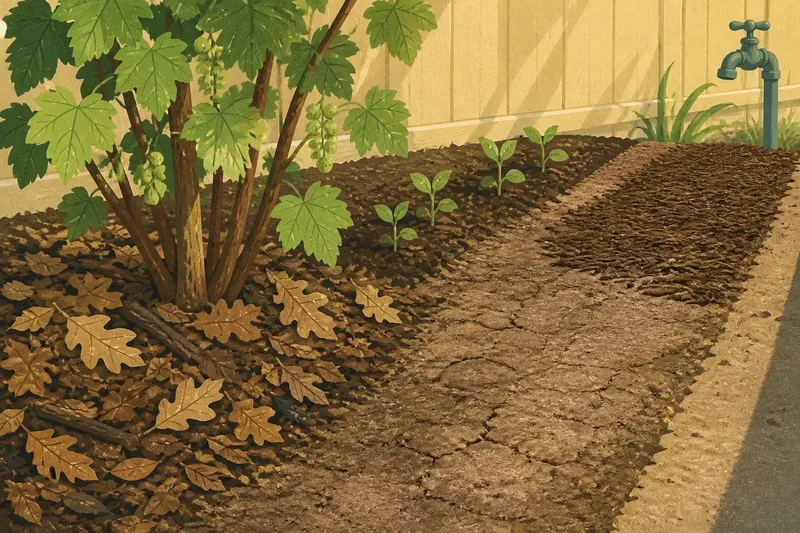
Look at the soil before deciding to dig, hoe or plant. If it clumps heavily on a tool or sticks to footwear, working it may damage its structure; if it crumbles readily, a light task may be more suitable. The right response depends on the particular soil and job, not simply the season.
Growth itself offers timing clues. New shoots can show where a plant is actively developing, while spent flowers, ripening seed heads or dormant stems may call for different choices. Do not assume that every untidy stem should be cut back: some provide shelter or food, and some plants are better left until their own growth pattern is clear.
Weather matters, but a forecast is a prompt, not a substitute for checking. After rain, inspect containers sheltered by walls or eaves; after wind, look for loosened supports and broken stems. These small observations help tailor care without turning the forecast into another rigid schedule.
Which approach fits?
Choose a fixed seasonal calendar if you find routines reassuring and need reminders for broad, recurring jobs. Keep its wording flexible, and confirm that a task suits the plant and conditions before carrying it out.
Choose a cue-led list if your garden has varied plants or conditions, or if you want each visit to begin with what is actually happening. To keep it reliable, make inspections part of a habit and write down anything that could be easy to overlook.
Choose the hybrid if you want a little structure but dislike being told that a task is due regardless of need. A few seasonal reminders to inspect can support a short list that changes as the garden changes.
Before committing, ask yourself three questions: Do dates help me remember, or make me feel behind? Can I recognise the condition that calls for this task? How much time can I give the garden on an ordinary visit? The answers point towards the approach you are most likely to use consistently.
Questions gardeners ask?
How often should I check the garden?
There is no single interval that suits every plot. A brief look when you are already outside can catch obvious needs, while containers, newly planted areas and exposed beds may merit closer attention when weather changes quickly.
Should I water on a set day?
Use a set day as a reminder to check, not as an automatic instruction to water. Assess the compost or soil and consider recent rain, shelter and the plant’s condition before deciding.
How do I avoid forgetting seasonal jobs?
Keep a small number of calendar reminders for inspections and record tasks that depend on a particular plant or event. A note such as “check support before stems lengthen” is more adaptable than assigning the same job to a fixed date every year.
What if I cannot identify a problem?
Note what you can observe, such as leaf changes, damaged stems or the state of the soil, and check a dependable gardening reference or ask a local horticultural adviser. Avoid treating an uncertain symptom with a product or drastic pruning before you know what is affecting the plant.
Let the list change
Review your routine when the garden’s needs shift or the list starts accumulating jobs. Remove reminders that no longer apply, add a prompt for a recurring issue you have noticed, and leave room for conditions that no calendar can predict.
A flexible garden-care calendar should reduce decisions, not multiply them. Keep dates for remembering to look, let visible needs guide the work, and allow a task to wait when the garden gives you no good reason to hurry.
That small distinction makes garden-care calendar planning more useful: the calendar opens the door to an inspection, but the garden gets the final say.