A Rainy Afternoon Inventory of Reusable Garden Materials
A reusable garden materials inventory helps you sort what is sound, match it to likely uses and avoid buying supplies before the garden plan is clear.
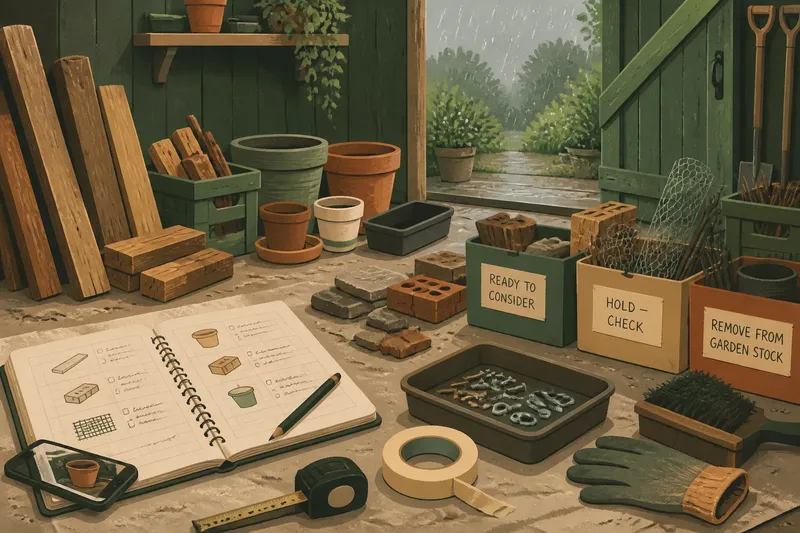
A reusable garden materials inventory begins under cover, with a dry place to sort what is already on hand before another bag of compost or bundle of timber comes home. A rainy afternoon suits the job: the beds can wait, while a measured look at leftover materials turns a vague store of “useful things” into a record tied to actual places in the garden.
The point is not to find a purpose for every scrap. Keep materials only when their condition, size and likely use make sense; record uncertain items for a later decision, and let unsuitable ones leave the garden. That restraint matters as much as reuse, because a pile of damaged or hazardous offcuts can make future work harder rather than easier.
Choose a sorting place
Start somewhere sheltered, with enough room to spread materials out without blocking a doorway or access to tools. A garage floor, shed bench or covered patio can work; lay down an old sheet if you want to keep small fixings from rolling away. Keep the route to the exit clear, especially if you are handling long boards or bulky containers.
Gather only items that are already stored or have been set aside for garden use. These might include sound timber offcuts, bricks, paving pieces, clean pots, plant supports, mesh, wire, tiles, empty containers and unopened fixings. Do not pull apart a sound garden structure just to enlarge the inventory: first record the materials you can assess without dismantling anything.
Use a notebook or a simple spreadsheet, a pencil, masking tape and a phone camera. A tape measure helps describe awkward pieces, but avoid turning this into a project to measure every small item. The useful record is one you can scan later, so note where an item is stored and photograph unusual shapes or mixed bundles.
Sort by material
Make broad groups before judging what each object might become. Separate timber, masonry, pots and containers, metal, mesh and fabric, and fixings; keep mixed or unidentified items in a temporary “check” group rather than guessing. This first pass reveals what is present without letting an appealing possible use distract from the condition of the material.
Keep materials with different handling needs apart. For example, sharp-edged mesh should not sit under a stack of pots where it can catch a hand, and loose screws belong in a container rather than among soil-stained pieces. If an item’s origin or treatment is unclear, do not assume it is suitable for a growing area or a place where children and pets spend time.
Then sort within each group by size and form. For timber, distinguish long straight lengths from short offcuts and note whether pieces are boards, stakes or rounded poles. For masonry, separate whole bricks from broken pieces and flat paving from irregular stone. For containers, group by shape and drainage rather than colour alone; a shallow tray and a deep pot do different jobs.
Judge condition carefully
Condition should be recorded in plain language. “Sound,” “needs cleaning,” “split,” “bent,” “unknown coating” and “incomplete set” tell you more than a vague mark such as “good”. Look for rot, sharp splinters, cracked edges, rust, brittle plastic, loose joints and residues that you cannot identify.
Clean soil from an object only when that can be done safely and without spreading an unknown substance. A stiff brush and a dry cloth may be enough for ordinary dirt; do not mix cleaning products or use a material in a new setting simply because it looks clean. Product labels, manufacturer instructions and local disposal rules matter where an item’s treatment, contents or disposal route is uncertain.
Give each item one of three decisions: ready to consider, hold for a closer check, or remove from garden stock. “Ready to consider” does not mean it must be used; it means its condition is clear enough to compare with a real need. Keep the hold group small and write down exactly what needs checking, such as an unknown coating or a missing fitting, so it does not become a permanent dumping ground.
Match stock to places
Now look at the garden, not the pile. On a rough sketch or in a notebook, mark places where a material might solve a specific need: a pot for a plant awaiting a home, a short stake for a young climber, or a flat piece to protect a surface while potting. Note the intended task beside the place, rather than writing a broad label such as “garden project”.
Compare the item’s shape and condition with that task. A straight timber offcut may suit a temporary plant label support but not a structure expected to bear weight; a sound, clean pot may be useful for a plant that needs moving, provided it has suitable drainage. Broken brick can be recorded as a possible edging component only if its edges and form suit the location and it can be handled without risk.
Say you have a narrow, sheltered corner where a potted herb needs a stable home, and your inventory lists a clean, intact container with drainage and a matching saucer. Note that exact pairing and check the space before moving the pot there; the observable result is a clear decision about whether the existing container fits the corner, rather than an assumption that every spare pot belongs somewhere. If it does not fit, record the mismatch and leave the plant where it is for now.
This place-based check also exposes materials with no current role. That is useful information, not a failure. Keep only what you can store safely and plausibly use; pass on sound surplus if someone else can use it, or follow the appropriate local route for items that should not remain in household storage.
Record what remains?
What should a garden materials inventory include?
Record the item, material, approximate size or shape, condition, storage place and a possible garden use only where one is genuinely plausible. Add a note if an item needs checking, and photograph unusual pieces so you can recognise them without unpacking everything again.
How do I decide whether leftover timber is reusable?
Look for soundness, straightness, splintering, rot, coatings and any uncertainty about treatment. A board that is fine for one low-risk use may be unsuitable for another, so match it to a specific task and consult relevant product information where its treatment is unclear.
Can broken pots or bricks still be useful?
Sometimes, but their condition and intended location matter more than the fact that they are leftovers. Record sharp edges, unstable shapes or cracks, then consider only uses where those qualities do not create a handling or placement problem.
How often should I update the inventory?
Update it after a material is used, moved, given away or added, and when a garden change creates a clear new need. A quick amendment is more useful than repeating the whole sorting session whenever a project comes up.
Store the useful stock
Put the ready-to-consider items back in a stable, dry place, grouped by material and size so their labels remain meaningful. Keep long pieces supported rather than leaning where they could fall, store small fixings in closed containers, and leave sharp or awkward items where they cannot snag clothing or obstruct a walkway.
Attach a simple label or keep a written map of the storage area. If stock is shared, include the intended use and any limits you have identified; “short clean stakes, light support only” is more helpful than “wood”. Leave the hold group visibly separate, with its check note attached, and set aside items that need an appropriate disposal decision rather than quietly returning them to the pile.
Finish by reviewing the garden’s next likely task and checking the inventory before buying anything for it. A reusable garden materials inventory is most valuable when it gives you a specific answer about what is available, what is uncertain and what still needs to be sourced. The rain may have kept you indoors, but the resulting record can make the next dry-day job simpler without turning every spare object into an obligation.